Blogs
Core Web Vitals for SEO
Content Editor · October 15, 2025 · 7 min read
Direct answer
How do Core Web Vitals for SEO influence rankings?
They’re used as signals within Google’s broader ranking systems. Improvements from “poor” to “good” can help especially on competitive queries while content relevance still dominates.
Core Web Vitals for SEO Improving Core Web Vitals for SEO is no longer guesswork it’s a structured, testable set of UX signals with clear thresholds and proven impact on visibility and revenue. Since Interaction to Next Paint (INP) officially replaced FID in March 2024, the conve...
Core Web Vitals for SEO
Improving Core Web Vitals for SEO is no longer guesswork it’s a structured, testable set of UX signals with clear thresholds and proven impact on visibility and revenue. Since Interaction to Next Paint (INP) officially replaced FID in March 2024, the conversation has matured from “Is speed a ranking factor?” to “Which fixes actually move rankings and business metrics?” Google’s documentation is clear: page experience isn’t a single system, but Core Web Vitals are part of the signals its core ranking systems consider, alongside content relevance and intent. In practical terms, consistently hitting LCP ≤ 2.5s, INP ≤ 200ms, and CLS ≤ 0.1 at the 75th percentile on real-user data is the bar for a “good” experience.
This article shows what actually drives rankings with Core Web Vitals for SEO: how to prioritize changes, which metrics move the needle fastest, and how to measure wins in the field (not just in lab tools). We’ll also share two bite-size case studies and a step-by-step prioritization flow you can copy to ship results faster.
What Google Does (and Doesn’t) Say About Core Web Vitals and Rankings
-
INP replaced FID on March 12, 2024.
Chrome deprecated FID; Google Search Console reports INP. If you still chase FID, you’re optimizing the wrong target. -
Core Web Vitals are used as ranking signals,
But “page experience” isn’t a single ranking system. Google looks at a variety of signals, and content quality can outweigh small performance gains.
Translation: aim to pass vitals site-wide while continuing to publish superior content. Google for Developers+2Search Engine Land+2 -
Benchmarks that matter
LCP ≤ 2.5s, INP ≤ 200ms, CLS ≤ 0.1 measured at the 75th percentile across mobile and desktop from field data (CrUX/GSC), not just Lighthouse.
Takeaway: Core Web Vitals for SEO
Matter most when they’re failing or borderline. Moving from “poor” to “good” often yields the clearest ranking and revenue impact.
The Three Metrics That Still Move Rankings
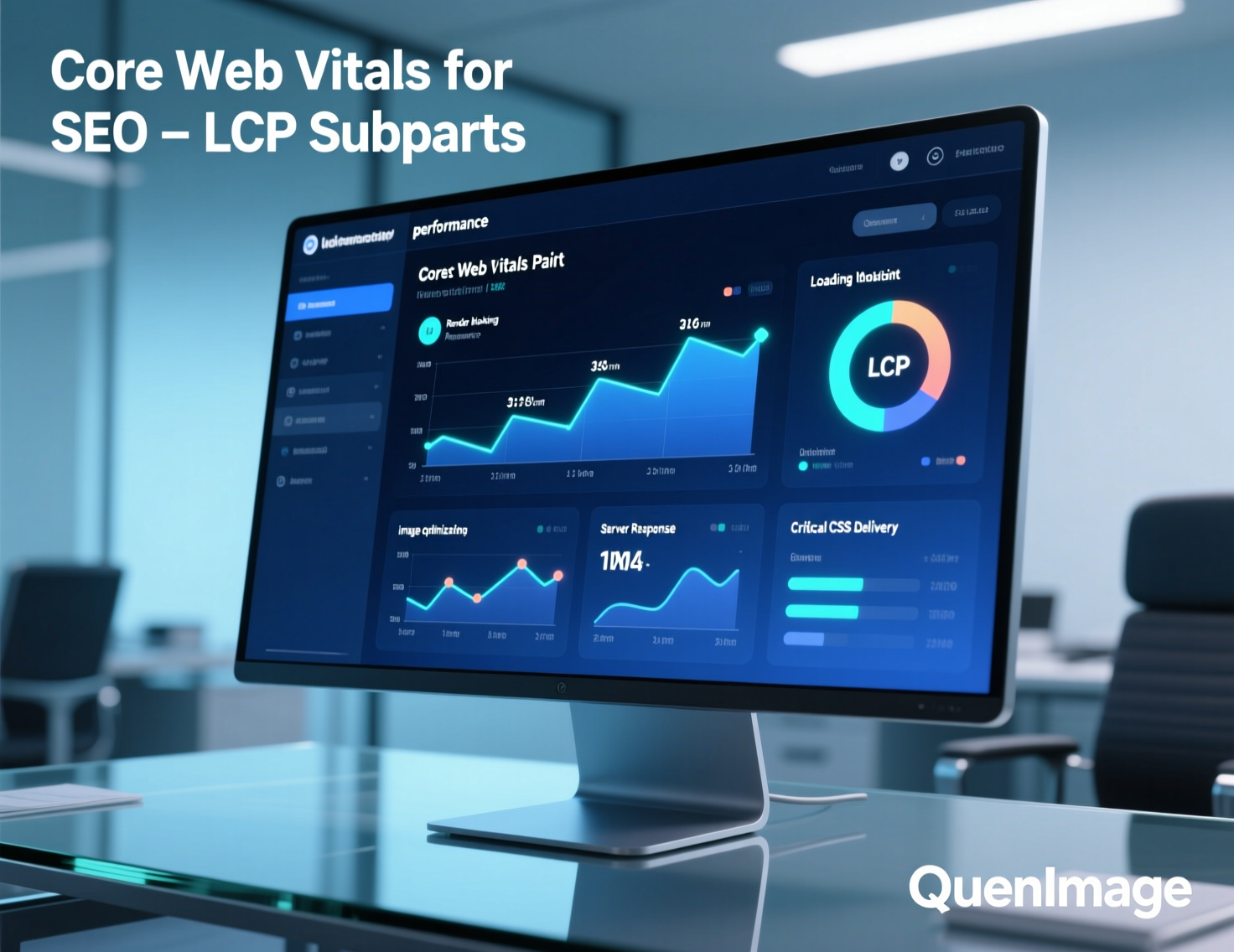
Largest Contentful Paint (LCP): Perceived Load
Goal: ≤ 2.5s (P75). LCP is typically your hero image, hero text, or a large product image.
High-impact fixes (ranked)
Serve modern formats
(AVIF/WebP) and compress LCP assets aggressively.
Preload the LCP resource
(image, critical font) and reduce render-blocking CSS/JS.
Improve TTFB
(edge caching, server-side rendering, HTML streaming).
Eliminate delays discovering the LCP element
(priority hints, ).
2) Interaction to Next Paint (INP): Responsiveness
Goal
≤ 200ms (P75). INP captures the longest interaction latency across taps/clicks/keys during a visit—much more robust than FID.
High-impact fixes (ranked)
-
Cut JavaScript main-thread work (code-split, defer, remove unused JS).
-
Break up long tasks with
scheduler.yield()/requestIdleCallback and move non-critical work off the main thread (Web Workers). -
Avoid heavy client-side hydration; prefer partial/streaming SSR or islands.
-
Reduce third-party script cost (tags, widgets, A/B tools).
3) Cumulative Layout Shift (CLS): Visual Stability
Goal
< 0.1 (P75). Frequent culprits: images without width/height, ads/embeds without reserved space, late-loading fonts. Pre-allocate space and stabilize fonts with font-display: optional|swap and size hints.
How to Prioritize: A Practical Flow That Works
Start with field data
(Search Console Core Web Vitals report + CrUX) to find templates with “poor/NI” status. Fix the worst template first (e.g., /product/*).
Map bottlenecks to subparts
(for LCP: TTFB, discovery, download, render). This converts a vague “slow” into a short, testable backlog.
Estimate impact
Prioritize changes that reduce P75 for the highest-traffic templates.
Ship small, measure
Validate in GSC (“Validate Fix”) and watch P75 shift over ~28 days.
This flow is how teams consistently improve Core Web Vitals for SEO without stalling content velocity.
Real-World Results (Short Case Notes)
Property services site
After a coordinated Core Web Vitals for SEO sprint (image compression, hero preload, JS budget), the site saw +40% organic traffic in ~5 months across two properties. While single studies aren’t universal proof, they illustrate the upside of moving URLs from red to green.
Multi-template content site (agency report)
Stabilizing CLS and improving LCP/INP reversed visibility decline and unlocked +7K users & +35K impressions within a period post-fixes (context: many variables, but CWV correlated with recovery).
Note
Google and industry voices remind us that perfect scores alone won’t outrank better content; think of Core Web Vitals for SEO as a multiplier for relevance rather than a substitute.

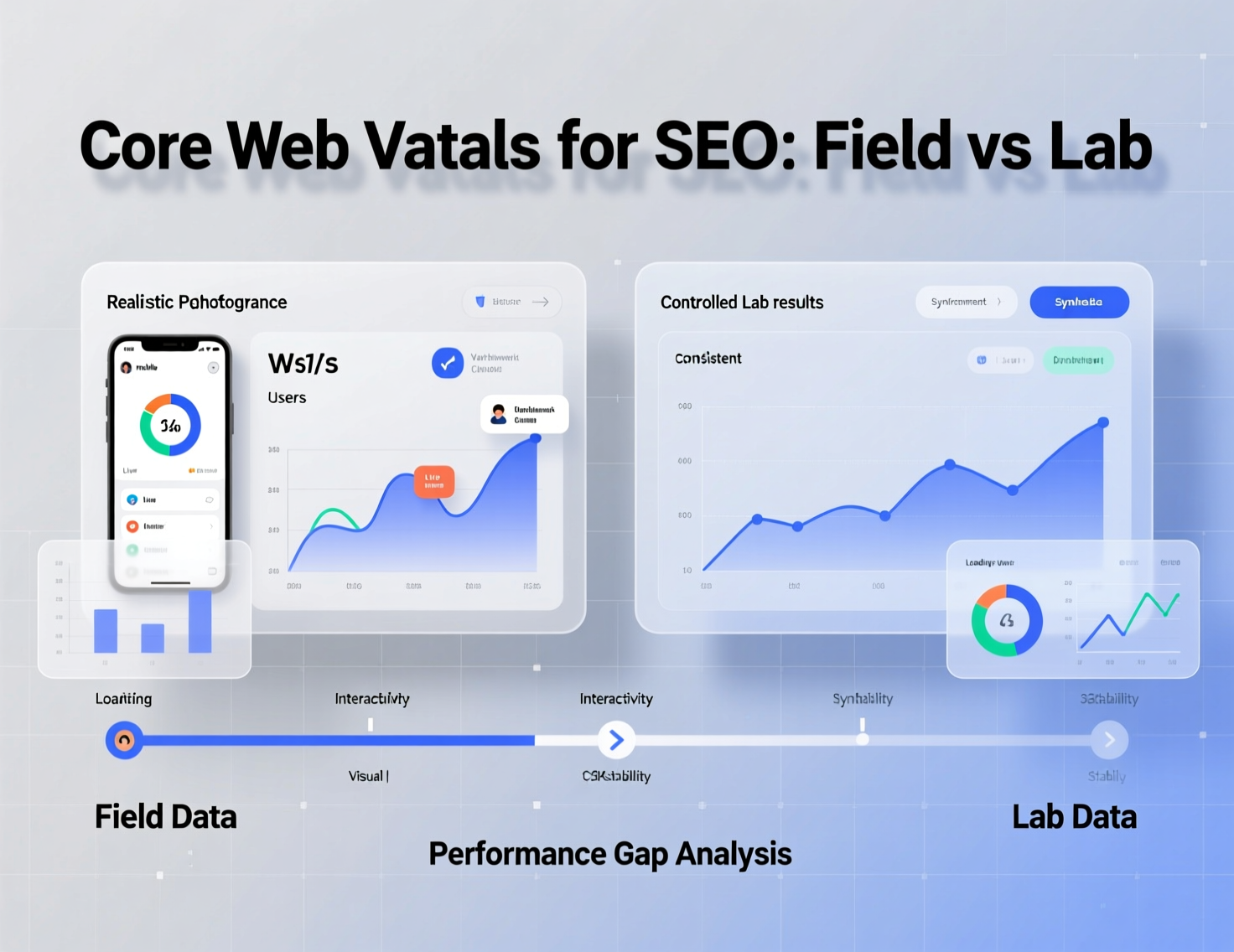
Tools & Measurement: Field vs. Lab
Field (real users):
Google Search Console Core Web Vitals, CrUX—source of truth for rankings.
Lab (diagnostics):
Lighthouse, PageSpeed Insights—great for debugging but not the KPI.
SEO suites
(Semrush/Ahrefs) surface CWV in audits; use them for monitoring alongside GSC.
Core Fixes That Usually Pay Off First
Reduce JS cost
Cap bundle budgets, defer non-critical scripts, remove unused libraries—often the biggest lever for INP.
Image strategy
Modern formats (AVIF/WebP), responsive sizes, priority hints, and proper width/height to prevent CLS.
Edge performance
Cache HTML where possible, stream SSR, and optimize TTFB—foundational for LCP.
Font stability
Preload critical fonts, define font-display, set fallback metrics to avoid shifts.
Implementation Playbook (Template-First)
Identify the highest-traffic failing template (e.g., PDPs).
Create a one-page spec listing LCP asset, main long tasks, CLS offenders.
Ship 3–5 fixes in one release (hero preload, compress images, defer analytics tag, reserve ad slots).
Track P75 movement for 28 days; only then expand to the next template.
Roll your Core Web Vitals for SEO wins into CI: budgets, performance gates, Lighthouse CI, and RUM dashboards.
Wrapping It Up
Core Web Vitals for SEO are leverage, not a silver bullet. They matter most when you’re failing thresholds or competing in tight SERPs where many pages are equally relevant. If you:
-
Pass LCP/INP/CLS at P75,
-
Keep content quality and links strong, and
-
Maintain performance budgets in your delivery pipeline,
you’ll see durable gains in visibility, engagement, and conversions without chasing vanity scores.
CTA
Want a 2-week, template-first Core Web Vitals for SEO sprint plan tailored to your stack? Tell me your CMS, top template types, and current GSC statuses we’ll map your quickest wins.
Frequently asked questions
Quick answers related to this article.
Comments
Join the discussion. Comments are moderated.
No comments yet. Be the first to share a thought.
Building something related?
Tell us about your product goals — we’ll respond with a clear next step.
Discuss your project